Smooth Running Without the Warning Lights
Engine Repair in Peabody for warning lights, rough idling, loss of power, unusual noises, and drivability problems that affect daily reliability
Engine performance problems show up as illuminated check engine lights, rough idling at stop signs, hesitation during acceleration, or knocking sounds that weren't present before. These symptoms point to ignition misfires, fuel delivery issues, sensor failures, vacuum leaks, or internal mechanical wear that disrupts combustion timing and cylinder balance. Right Repair Automotive Service handles engine repair in Peabody by reading diagnostic trouble codes, performing cylinder compression and leak-down tests, and using scan data to isolate whether the problem originates in the ignition system, fuel system, emissions controls, or internal engine components. Accurate diagnosis prevents replacing parts that aren't causing the drivability issue and identifies the specific failure before repairs begin.
Engine diagnosis starts with connecting a scan tool to retrieve stored and pending trouble codes, then monitoring live sensor data to see how the engine responds under load. A misfire code might point to a failed ignition coil, fouled spark plug, clogged fuel injector, or low compression from a burnt valve—each cause requires a different repair, so testing confirms which component has actually failed. Repairs address the documented problem, whether that involves replacing a failing mass airflow sensor that's causing incorrect fuel metering, cleaning carbon buildup from intake valves, or repairing an oil leak that's allowing fluid to drip onto exhaust components and create smoke.
Schedule an engine evaluation to identify what's causing the warning light or performance change before the problem worsens.
What Engine Repair Actually Accomplishes
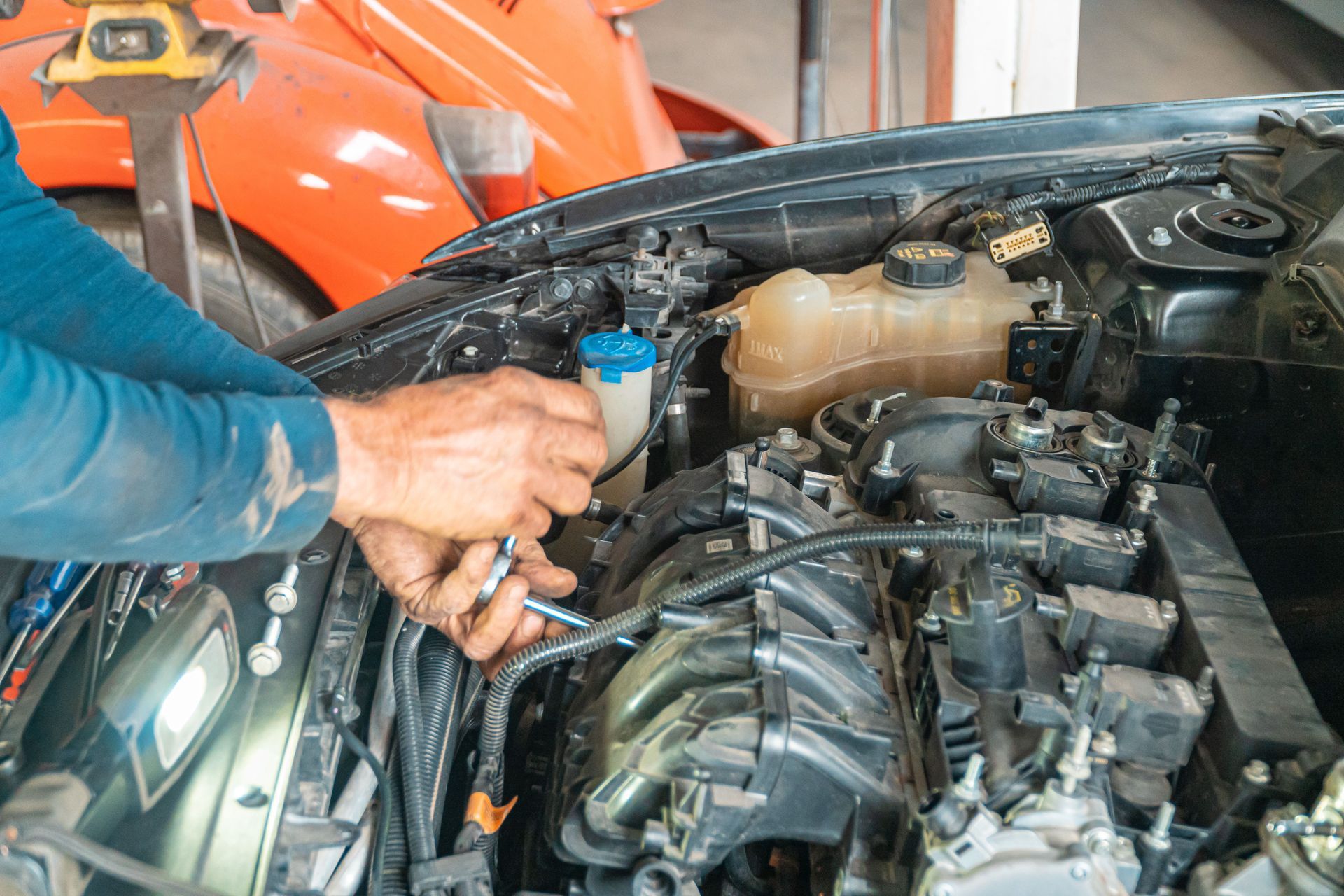
Engine repair work ranges from replacing external sensors and ignition components to addressing internal wear that affects compression and oil consumption. The diagnostic process determines whether the engine is losing power due to a clogged catalytic converter that restricts exhaust flow, a failing oxygen sensor that skews fuel trim, or worn piston rings that allow combustion pressure to escape into the crankcase. Repairs follow what the data reveals—if cylinder leak-down testing shows compression escaping past the valves, valve service becomes necessary, but if the leak is past the rings, internal engine work or replacement may be required depending on overall engine condition and mileage.
Once engine repairs are completed, the check engine light stays off after clearing codes and completing a full drive cycle, the engine idles smoothly without shaking or stalling, and throttle response becomes immediate without hesitation or stumbling. Power returns to normal levels during highway merging and hill climbs, and unusual noises disappear because the component that was failing or vibrating has been replaced or repaired. You'll notice the engine runs quieter, pulls harder under load, and no longer exhibits the rough running or loss of power that prompted the repair. These changes confirm that combustion is occurring evenly across all cylinders and that the engine is operating within its designed parameters.
Engine problems don't always require major teardown—many drivability issues stem from failed sensors, ignition coils, or vacuum leaks that are straightforward to replace once identified. The scope of engine repair depends entirely on what diagnostic testing reveals, and estimates reflect the work necessary to restore proper operation based on the specific failure mode. Internal engine work becomes necessary only when compression testing or oil consumption indicates wear that can't be corrected with external component replacement.
What Property Owners Usually Ask
Engine repair raises questions about what's failing, how serious the problem is, and what the repair process involves for drivers around Peabody and neighboring communities.
What causes a check engine light to come on and stay illuminated?
The check engine light illuminates when the engine control module detects a sensor reading or system performance that falls outside programmed limits—common triggers include misfires, oxygen sensor faults, evaporative system leaks, and catalytic converter efficiency below threshold.
How do you determine whether an engine problem requires internal repair or external component replacement?
Diagnosis involves compression testing to measure cylinder sealing, leak-down testing to identify where compression is escaping, and oil consumption monitoring—if compression is even and within specification, the problem is typically external and solvable with sensor, ignition, or fuel system repairs.
Why does an engine misfire feel worse at idle than under acceleration?
Misfires are more noticeable at idle because the engine runs at lower RPM with less rotating inertia to smooth out the power pulses, making the vibration from one cylinder not firing more pronounced than when the engine is spinning faster under load.
What should oil pressure read if the engine's lubrication system is functioning correctly?
Oil pressure varies by engine design, but most vehicles show 20 to 30 PSI at idle and 40 to 60 PSI at highway speeds when warm—pressure below specification indicates worn bearings, a failing oil pump, or diluted oil that's lost viscosity.
When should engine noises be inspected rather than monitored?
Engine noises should be inspected immediately if they're metallic, rhythmic with engine speed, or accompanied by warning lights, because knocking or ticking sounds often indicate bearing wear, valvetrain problems, or detonation that can cause rapid damage if the engine continues running under load.
Right Repair Automotive Service brings over 35 years of automotive experience to engine diagnostics and repair, and every job starts with confirming what's actually failing before parts get ordered. Arrange an engine inspection to understand what's required to restore performance and receive a free estimate based on documented findings.