Stopping Power That Responds Immediately
Brake Repair in Peabody for squealing, grinding, vibration, and reduced stopping response during local traffic and changing road conditions
Brakes that squeal during light application, grind when pressed firmly, or vibrate through the pedal during highway stops indicate wear or damage that affects stopping performance. Right Repair Automotive Service addresses brake repair in Peabody by inspecting rotors, pads, calipers, and hydraulic components to identify what's causing the symptom before replacing parts. Brake problems develop gradually as friction material wears down to the backing plate, rotors develop heat spots from repeated hard stops, or caliper pistons seize and prevent even pad contact. These conditions become more noticeable during New England driving, where road salt accelerates corrosion on caliper slide pins and brake hardware, and temperature swings cause rotors to warp from thermal stress.
Brake inspection measures remaining pad thickness, checks rotor surface for scoring and runout, and tests caliper operation to confirm pistons retract fully and slide pins move freely. Squealing often comes from worn pads where the wear indicator tab contacts the rotor, while grinding means the friction material is gone and metal backing plates are cutting into the rotor surface. Repairs include replacing worn pads, resurfacing or replacing rotors that exceed thickness limits, and servicing calipers that bind or leak. The work restores even pad contact and eliminates the friction inconsistencies that cause noise and vibration during braking.
Schedule a direct brake inspection to determine what's required to restore dependable stopping response.
How Brake Repair Addresses Stopping Concerns
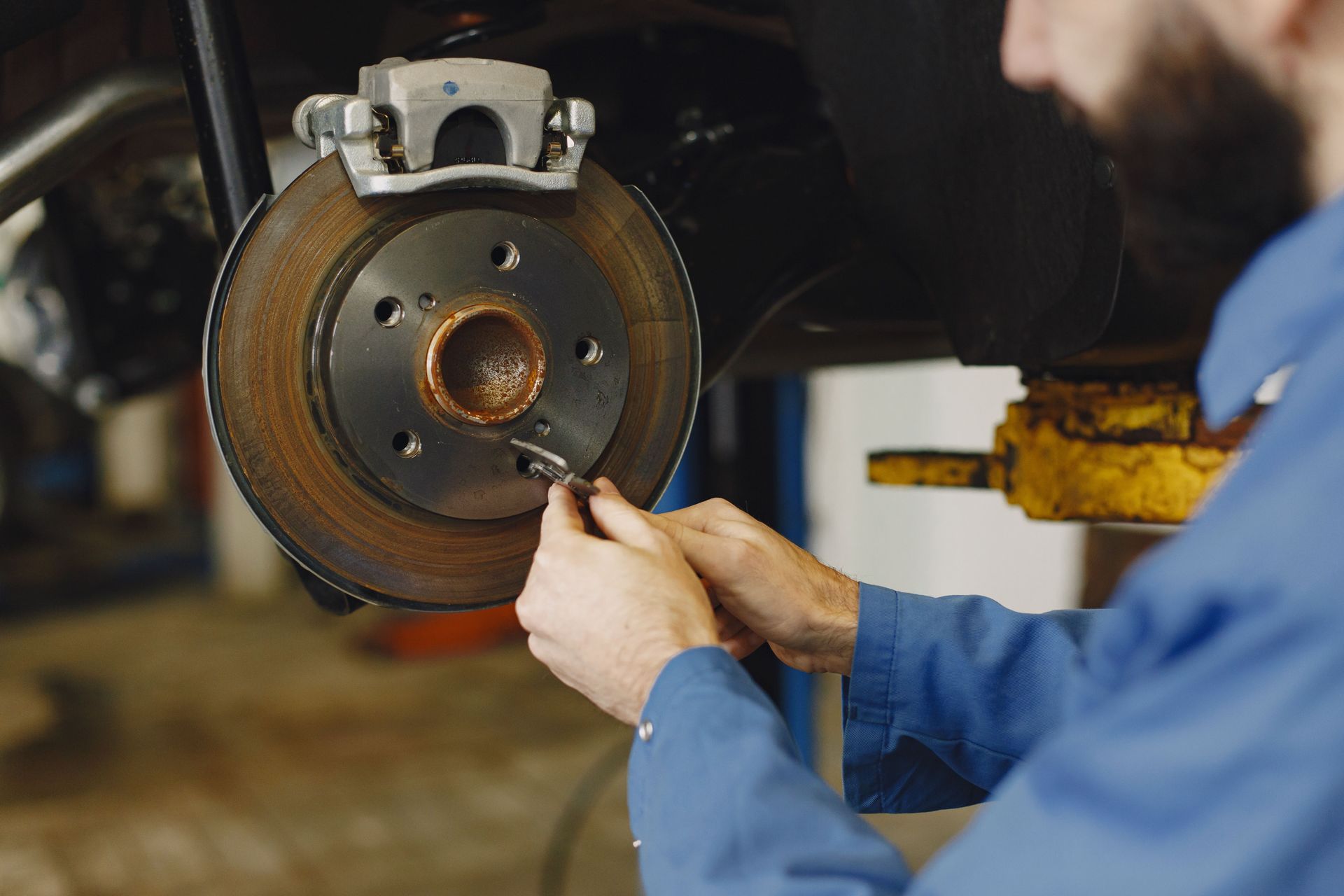
Brake repairs focus on restoring the friction surface and hydraulic pressure required for controlled, even stops. Inspection involves removing wheels to measure pad thickness with a caliper, checking rotor lateral runout with a dial indicator, and verifying that brake fluid isn't contaminated with moisture that lowers its boiling point and causes spongy pedal feel. Rotors that show deep grooves or excessive runout get machined flat if enough material remains, or replaced if they've worn below the minimum thickness specification cast into the rotor hub. Caliper service includes cleaning and lubricating slide pins that allow the caliper to float and apply pressure evenly across both pads.
After brake repair, you'll notice the pedal feels firm without requiring excessive travel, stops occur smoothly without vibration or pulling to one side, and the brakes operate silently during normal application. Stopping distances shorten because both pads contact the rotor evenly with full hydraulic pressure, and the brakes respond immediately when you press the pedal rather than requiring extra pump strokes to build pressure. These changes confirm that the friction surfaces are making proper contact and that the hydraulic system is delivering consistent clamping force.
Brake work doesn't always require replacing all four corners—front brakes handle most of the stopping force and wear faster than rear brakes, so isolated front pad and rotor replacement is common when rear components still measure within specification. The scope depends entirely on what the inspection reveals, and recommendations address only the components that have reached their service limit or are causing the reported symptom.
Common Questions About This Service
Brake concerns prompt immediate questions, especially when drivers notice changes in stopping performance or hear unfamiliar sounds around Peabody and the North Shore.
What causes brake rotors to warp and create vibration?
Rotor warping occurs when repeated hard braking heats the rotor unevenly and creates high spots that cause thickness variation, which you feel as pulsation through the pedal when the pads make intermittent contact with the uneven surface.
How do you determine whether rotors can be resurfaced or need replacement?
Rotors can be resurfaced if they measure above the minimum thickness specification after machining removes enough material to eliminate scoring and runout—if they're already at or below the discard thickness, replacement is required because further machining leaves insufficient material to dissipate heat safely.
Why do brakes squeal even when the pads still have material left?
Squealing with remaining pad material often indicates brake dust buildup, glazed pad surfaces from overheating, or missing anti-rattle shims that allow the pad to vibrate against the caliper bracket at frequencies you hear as a high-pitched squeal.
What should brake fluid look like if the hydraulic system is healthy?
Fresh brake fluid appears clear to light amber and feels slick, while contaminated fluid turns dark brown and absorbs moisture over time, lowering its boiling point and introducing corrosion into calipers and master cylinder bores.
When should grinding brakes be repaired rather than driven further?
Grinding brakes should be repaired immediately because the noise confirms metal-to-metal contact that's damaging the rotor surface with every stop, rapidly increasing repair costs as rotors that could have been resurfaced become too scored to save and require replacement.
Right Repair Automotive Service has handled brake repairs across the North Shore for more than 35 years, and every estimate reflects only the components that need attention based on measured wear and documented symptoms. Set up a brake evaluation to confirm what's required and receive a free estimate before any work begins.